Eurotyre – Linking Tyre – Chassis – Road
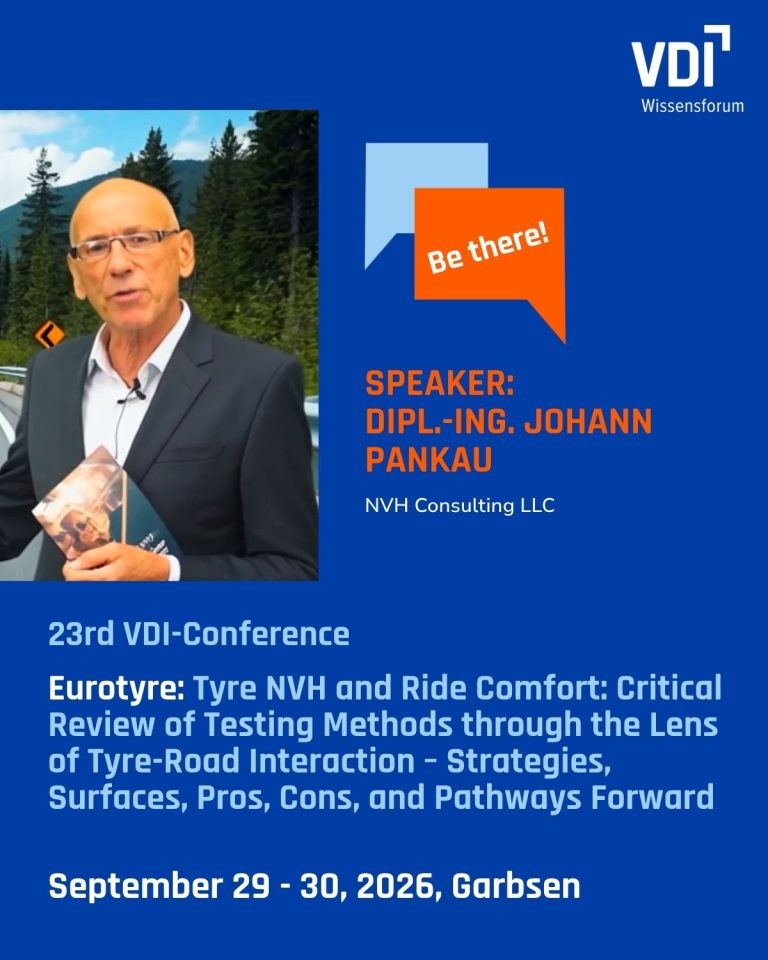
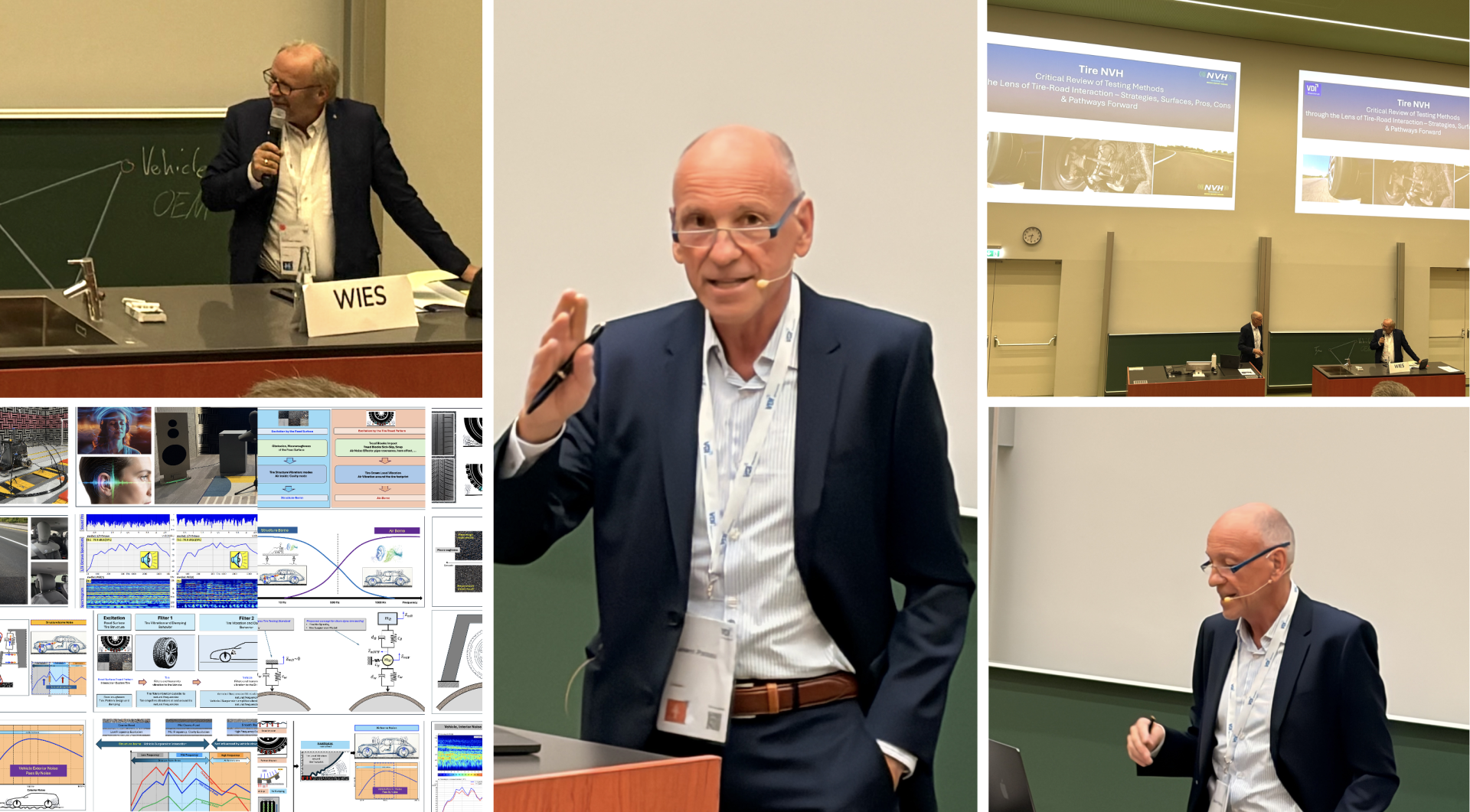
On September 30, I had the honor of opening Day 2 of the 23rd International VDI Conference Eurotyre – Linking Tyre – Chassis – Road at Leibniz Universität Hannover, Campus Garbsen, with a keynote moderated by Prof. Dr.-Ing. Burkhard Wies (ITEC), the conference chair.
Pankau will present:
My topic: “Tyre NVH and Ride Comfort: Critical Review of Testing Methods through the Lens of Tyre-Road Interaction – Strategies, Surfaces, Pros, Cons, and Pathways Forward.”
The main points:
🔹 Tire-road interaction drives the result. Road texture sets the excitation: coarse surfaces bring out low-frequency booming and structural modes, while smooth surfaces shift the noise toward tread pattern and high frequencies. The same tire can rank very differently depending on the surface. A summer tire can be quiet on smooth asphalt and transmit more on rough roads, while an all-season tire often shows the opposite. There is no universally quieter tire, only a tire that suits a given road and vehicle.
🔹 Full-vehicle testing remains the reference, with conditions. It gives real excitation and real vehicle response, but proving-ground surfaces wear and change over time, and correlation between different test sites is often poor. A reference tire in every test series is essential, and so is subjective evaluation, because the driver is the final filter in the noise path.
🔹 Boundary conditions matter on the test bench. A rigid fixed-spindle dyno has no suspension compliance, so above roughly 150–200 Hz the measured forces increasingly reflect the rig rather than the tire. It remains valuable for early development and tire-to-tire comparison, but should not be the only basis for vehicle-level noise prediction.
🔹 No single method is enough. Simulation needs validation against physical measurement, and psychoacoustic evaluation belongs in the standard toolkit. The most reliable path is an intelligent combination of methods, not one “ideal” test.
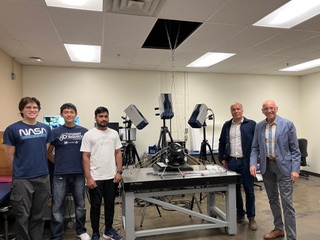
🔹 A path forward. A flexible spindle rig, a compliant suspension corner with a rolling tire, combined with full-field scanning laser vibrometry, could show how suspension compliance changes tire vibration transfer.
The talk led to many discussions afterwards, which was the best part. Thank you to the VDI Wissensforum team, to Prof. Wies and the program committee, and to all the speakers and attendees. The sessions on tire modeling, tire-road interaction, and virtual development across tire makers, OEMs, and research institutes made for a very strong two days.
If you work on tire-vehicle correlation, test method harmonization, or experimental validation for simulation, I’d like to hear from you.